Set up a softer landing
Reduce the usual friction: harsh light, a too-warm bed, late noise, or one more thing to decide.
Explore the bedroom setup →Small shifts in your room and routine can make bedtime feel less like a battle. Start with what is getting in your way tonight.
Find your first gentle step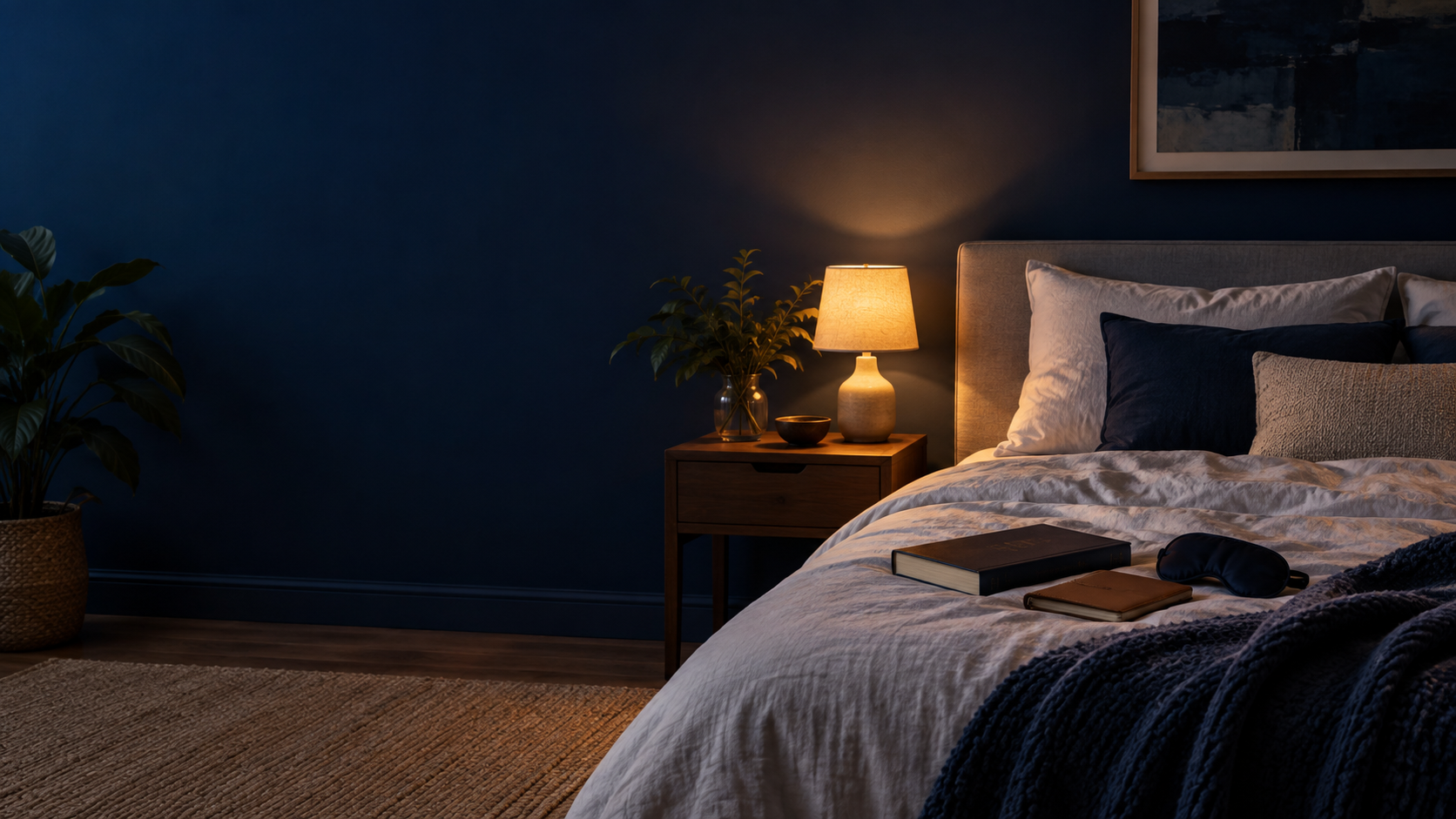
Your starting point
Choose the friction you feel most often. We will give you a simple place to begin — without pretending there is one answer for everyone.
You do not need to rebuild your whole routine. Start with one practical adjustment and give it a few nights.
Useful, not overwhelming
Short, practical guides that connect the feeling you have at bedtime with an action you can actually try.
Reduce the usual friction: harsh light, a too-warm bed, late noise, or one more thing to decide.
Explore the bedroom setup →Try slow exhale breathing, a brief body scan, or a notebook ritual that closes the day rather than extending it.
See guided support →Choose a cue that travels with you: the same lamp, audio, scent-free tea, or three lines in a sleep journal.
Build your first setup →Sleep therapy & guided support
Bedtime Cues helps you understand the tools people often use alongside a steadier bedtime routine — from evidence-informed behavioural approaches to calming audio and breath practices.
Sleep environment
Comfort is not a luxury. It is the quiet foundation for habits that can last.
Start with soft, low light in the hour before bed. Consider a good sleep mask or blackout solution only where it solves a real problem.
Use earplugs, steady sound, or small room changes to make unpredictable noise feel less demanding.
Make temperature easier to manage with breathable layers, a familiar pillow, and fewer bedtime decisions.
Create a kind, realistic place for your phone to rest outside the bed — rather than relying on willpower at midnight.
Your first Bedtime Cues setup
A good sleep routine is not an impressive checklist. It is a set of cues that feel doable on an ordinary Tuesday — even after a full day.
Choose your first stepLight, noise, comfort, racing thoughts, or screen habit.
Try it for several nights before adding anything else.
Use a short journal note, not a perfection score.